The Lost Worlds of Sicily
Come and immerse yourself in Sicily — the great crossroads of the Mediterranean, where more civilizations have risen, ruled, and vanished than almost anywhere on earth. For three thousand years this island has been conquered and reconquered — by Greeks and Phoenicians, Romans and Arabs, Normans and Spaniards — each leaving a world that the next would build upon, bury, and half-forget. Over eight unforgettable days we travel across Sicily to uncover those lost worlds: Greek temples standing alone in the hills, a Phoenician island reached by boat, an Arab bath the Normans could not bring themselves to destroy, a Roman villa swallowed by the earth for seven centuries, and a cathedral built inside a Greek temple that is still in use today. Everywhere, the great theme of our journey: the tension between what is buried and what is still gloriously alive.
This is an island where every conqueror left his mark on a single building, where a Norman king commissioned Arab craftsmen and Byzantine mosaicists to work side by side, and where the dead of a 2,500-year-old battle were found lying exactly where they fell. We will stand beneath golden mosaics in Monreale, walk among the unfinished Doric columns of Segesta, cross a shallow lagoon to a Phoenician island to meet one of the most beautiful Greek statues ever found, and end beneath the smoking summit of Etna in a Greek theater carved into the rock. Sicily forgets nothing — it simply builds the next world on top of the last.
And we will taste all of it. Sicilian food is the most layered in Italy — every dish an accident of conquest. We will eat arancine and eggplant caponata born of Arab spice routes, fish couscous carried across from North Africa and still made on the island's western coast, cassata and granita that the Arabs invented from the snows of Etna. In Palermo we will taste freshly filled cannoli at a centuries-old convent bakery, where the nuns' secret recipes were nearly lost and then revived. We will raise glasses of Sicilian wine — the volcanic reds of Etna, the Greek-rooted whites of the west, and the fortified Marsala that Lord Nelson's British fleet once drank. There will be a welcome dinner, a farewell feast, a wine tasting, and long convivial lunches all along the way — and, as always, a few surprises.
Expedition Itinerary
Welcome to Sicily! We will meet you at Palermo's Falcone-Borsellino Airport for a private transfer to your hotel in the historic heart of the city. Palermo is one of the most layered cities on earth — founded by the Phoenicians, ruled by Greeks, Romans, Arabs, Normans, and Spaniards in turn, each leaving their fingerprints on its streets, its churches, and above all its food.
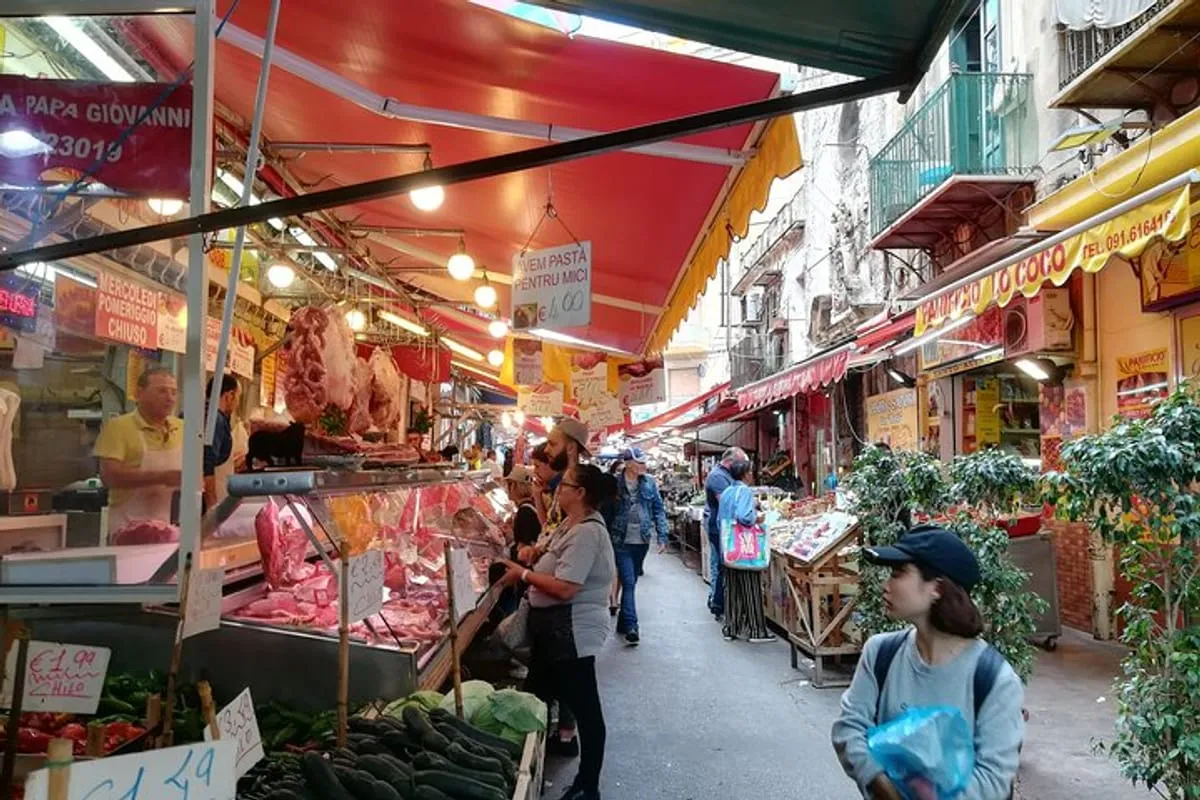
This afternoon, for those who have arrived in time, we ease gently into the island at the Ballarò market, which has fed Palermo for a thousand years — begun by Arab traders and still the most gloriously alive place in the city, its stalls piled high with swordfish, citrus, olives, and spices, the vendors still calling out in a sing-song chant inherited from the souks of the Arab world. It is the perfect, unhurried introduction to a city where every conqueror left something behind. Those arriving later on international flights can settle in and join us for dinner.
Evening: We gather for a welcome dinner in the atmospheric Kalsa quarter — pasta with swordfish, mint, and eggplant, one of the great classics of the Sicilian seas, with a glass of Nero d'Avola, raising a toast to the journey ahead.
Overnight in Palermo
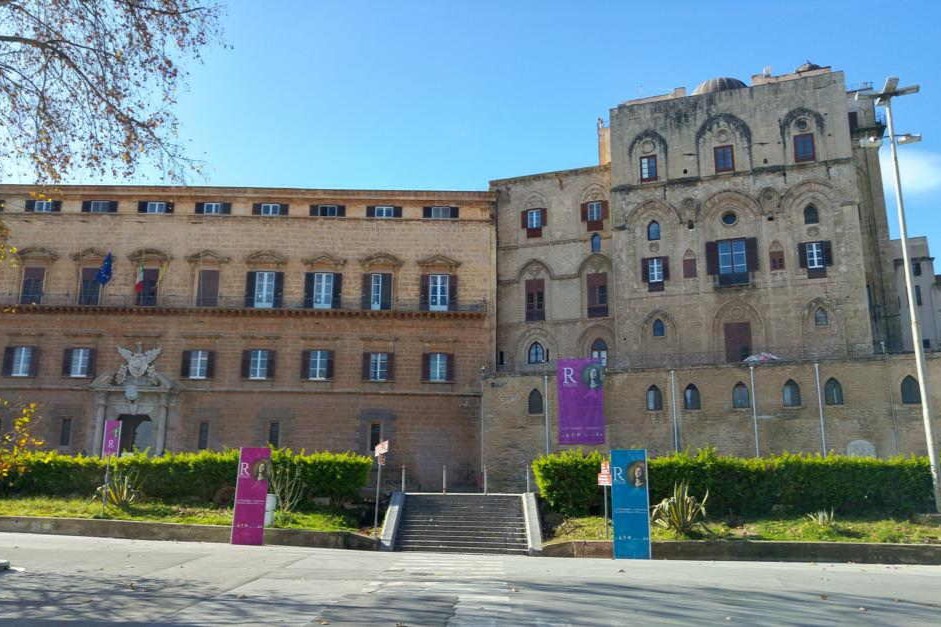
Today we uncover the golden age when Sicily was the most sophisticated kingdom in Europe. We begin at the Norman Palace and its breathtaking Palatine Chapel, built around 1130 — a single room where a Norman king, an Arab honeycomb ceiling, and shimmering Byzantine gold mosaics meet in perfect harmony. There is nothing else like it on earth: three civilizations, three faiths, one chapel. A short walk away stands San Giovanni degli Eremiti, where the Normans raised a church over an Arab mosque and kept its red domes — that, in a single image, is Sicily. We then come to the great Palermo Cathedral, a building begun by the Normans in 1185 on the site of a mosque that had itself once been a Christian basilica — and reworked by every power that followed, so that Norman, Arab, Gothic, Catalan, and Baroque all meet in a single astonishing facade. But the Cathedral's deepest significance lies within, in the chapel of the royal tombs, where the greatest rulers of medieval Sicily lie in massive sarcophagi of imperial porphyry, the rare purple stone once reserved for the Caesars themselves. Here rests Roger II, the first king of Sicily and founder of the Norman kingdom; his daughter Constance and her husband the Emperor Henry VI; and above all Frederick II — 'Stupor Mundi,' the Wonder of the World, the dazzling Hohenstaufen emperor who spoke six languages, kept an exotic menagerie, and made Palermo the most brilliant court in Europe. As one Sicilian historian beautifully put it, gathered in this single chapel lie the founder of the kingdom, its destroyer, the cause of its end, and its last great glory. To stand among them is to stand at the buried heart of the lost kingdom of Sicily.
From the tombs of the dead we go to visit the living: a short walk brings us to a palace still standing from the Norman age — the last of its kind left in the city — and, remarkably, still home to the very family descended from Frederick II himself. Built into Palermo's ancient city walls and in the same family's hands for centuries, it offers a rare chance to step out of the museum and into a living continuation of the story we've just traced through the Cathedral. A member of the family themselves usually welcomes us, sharing personal history alongside seven centuries of Sicilian history — frescoed ceilings, ancestral portraits, and even the eagle of Frederick II worked into the tiled floor beneath our feet.
Later we pause at a convent that has guarded Sicily's sweetest secret: at the monastery bakery of Santa Caterina, where cloistered nuns sold their pastries through a hatch in the wall for centuries, we taste freshly filled cannoli made from recipes nearly lost when the convents closed — and lovingly revived. A buried tradition, alive again on the tongue.
The late afternoon is free. For those who wish, one option nearby is the extraordinary Capuchin Catacombs of Palermo, where some eight thousand mummified Palermitans — friars, nobles, professionals, and children, many still in their finest clothes — have been displayed in the corridors since 1599. It is haunting and unlike anywhere else on earth, an entire buried society still present; it is also intense and not for everyone, so it is offered purely as a suggestion for those drawn to it, to visit at their own pace, while others may prefer to relax or explore elsewhere in the city before dinner. Overnight in Palermo.
Today we journey out across the Norman heartland. We begin at the mighty Castello di Caccamo, perched on a cliff above the valley — one of the largest and best-preserved Norman castles in all of Italy, raised in the 12th century on the site of an earlier Arab stronghold, and never once taken by force. Within its maze of halls is the Sala della Congiura, the Conspiracy Hall, where in 1160 the Norman barons gathered to plot their revolt against King William I — the grandson of the very Roger II whose tomb we stood before in Palermo. Its ramparts command breathtaking views over the Sicilian interior.
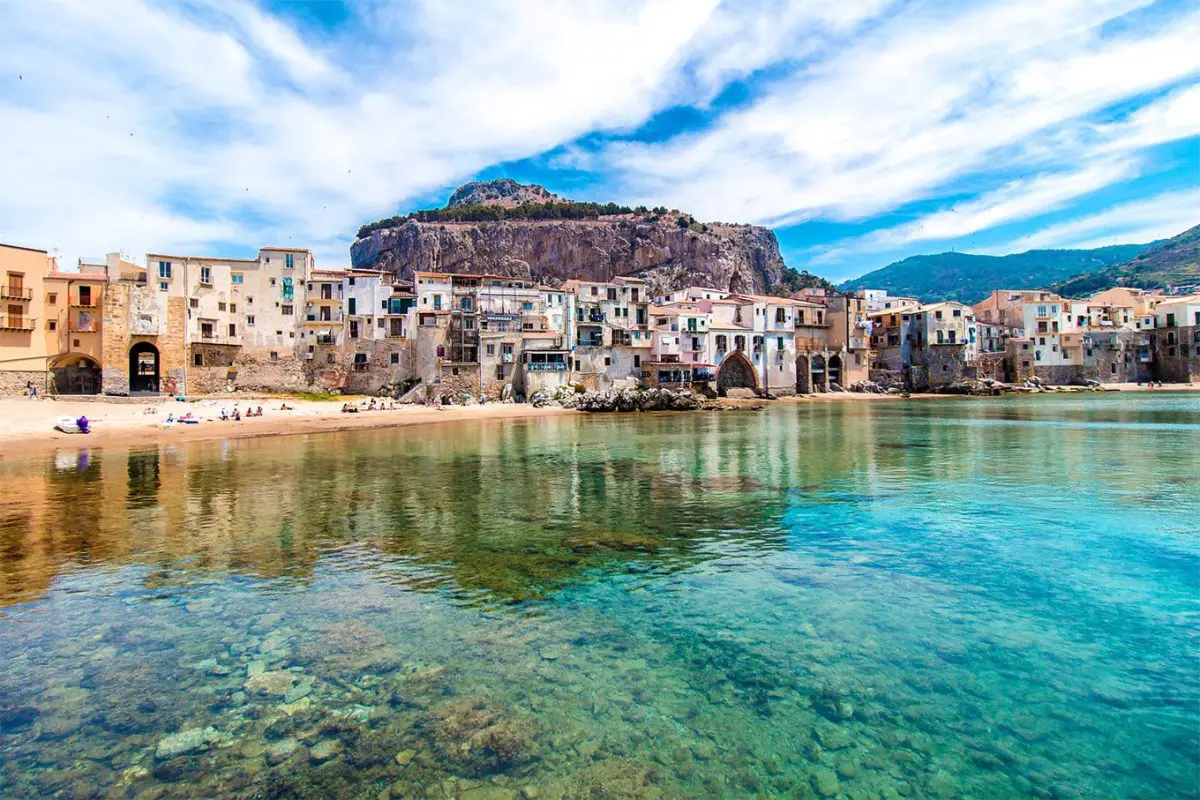
We drive on to Cefalù, one of the most beautiful small towns in Sicily, huddled beneath a great crag where a Norman cathedral rises above the rooftops. King Roger II vowed to build this cathedral after surviving a storm at sea, and the Christ Pantocrator gazing down from its apse — completed around 1148 — predates Monreale and is, to many eyes, even more sublime. There is free time here for lunch and to wander the medieval lanes down to the old fishing harbor, perhaps with a granita in hand.
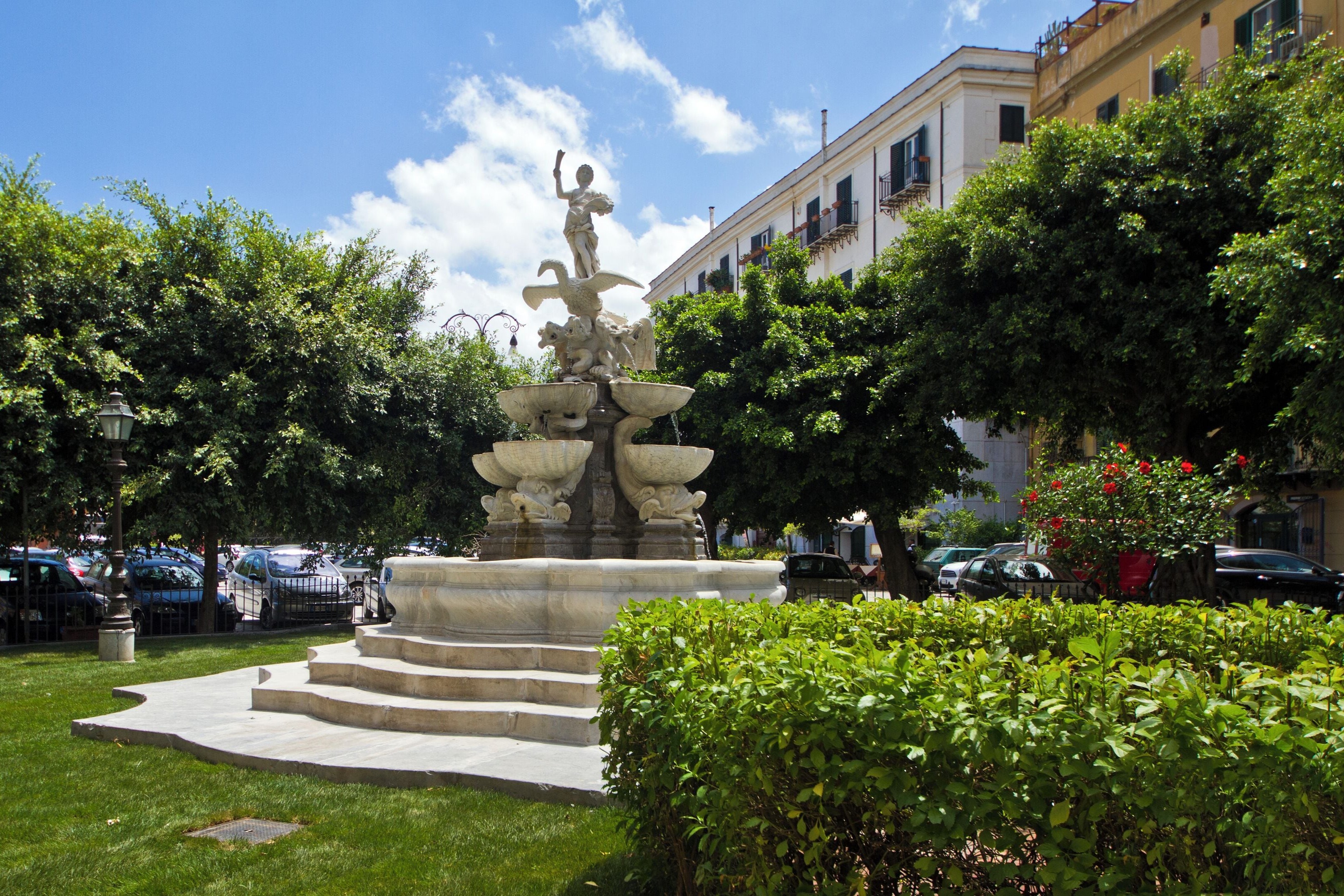
On our way back we stop at Monreale, just above Palermo, to stand inside what many consider the most golden room in all of medieval Christendom. The Cathedral of Monreale was raised by the Norman king William II in 1174 — not only to honor God but to outshine his rival the Archbishop of Palermo — and its interior is sheathed in some 6,000 square meters (about 64,500 square feet) of Byzantine gold mosaic, crowned by an immense Christ Pantocrator. Its serene cloister, ringed by 228 paired columns each carved differently, is one of the loveliest spaces in Italy. We then settle back into Palermo for the evening, which is yours at leisure — there is a great deal more to discover at your own pace: the historic markets of the Vucciria and the Capo, each a thousand-year-old tangle of stalls and street food; the Baroque crossroads of the Quattro Canti and the fountain of Piazza Pretoria; the glittering mosaics of the Martorana church; or the grand Teatro Massimo, one of the largest opera houses in Europe.
Overnight in Palermo
Today we leave Palermo and journey west through the layered heart of the island. We begin at the Arab baths of Cefalà Diana, the only surviving Islamic-era bathhouse in Sicily — a hammam built around the year 1000 that even the conquering Normans could not bring themselves to destroy, its Kufic inscription still legible on the outer wall. It is a small, quiet, and deeply atmospheric survivor of the island's Arab centuries, when Palermo was one of the great cities of the Islamic world.
In the afternoon we reach Segesta, where a perfect Doric temple stands alone on a windswept hill. Built around 420 BC and never finished — it has no roof, and its columns were never fluted — it survived precisely because it was forgotten, and no one ever came to strip its stones. Nearby, carved into the hillside, a Greek theater looks out over a sweep of valleys to the distant sea. Both were raised by the Elymians, a mysterious people, neither Greek nor Phoenician, whom we still do not fully understand. We end the day climbing to the medieval mountain town of Erice, our base for the next two nights, its silent streets and stone courtyards often wrapped in sea mist high above the western coast.
Overnight in Erice
We begin the morning in Erice itself, a town where the Normans built their Castello di Venere directly upon an ancient temple to Venus — and before her, the Phoenician Astarte — that crowned this mountain for three thousand years. We wander its silent medieval lanes and stop at a historic pastry shop whose almond sweets were learned, generations ago, from the cloistered nuns of the town.
Then we descend to the coast and the shimmering salt pans of Trapani, where the Phoenicians first harvested salt 2,500 years ago and the old windmills still turn over the pink-tinted shallows. From here we cross by boat — a five-minute glide over a lagoon so shallow the ancient causeway still lies just beneath the surface — to the island of Mozia, one of the greatest Phoenician cities of the western Mediterranean, destroyed and abandoned and never built over again. On this Phoenician island stands one of the most beautiful Greek statues ever found, the Charioteer of Motya — a serene marble youth whose presence here, on the soil of Carthage's ally, remains a mystery no one has fully solved. This evening is free; we suggest seeking out a local fish couscous, the great dish of western Sicily carried across the sea from North Africa and still made here as it has been for centuries, with a crisp local Grillo white.
Overnight in Erice
Today we travel south to the Valley of the Temples at Agrigento, the most magnificent stretch of Greek architecture outside Greece itself. In its prime, Agrigento was richer than Athens, and its temples blazed with color and gold — until Carthage burned the city in a single night in 406 BC. What survives, strung along a golden ridge above the sea, includes the near-perfect Temple of Concordia, one of the best-preserved Greek temples anywhere in the world. We will walk the sacred way among these giants as the Greeks once did. Just along the coast we pause at a viewpoint over the Scala dei Turchi, the dazzling white staircase of marl cliffs plunging into a turquoise sea — named for the Saracen and Barbary corsairs who once sheltered beneath it.
In the afternoon we drive into the island's interior to the Villa Romana del Casale near Piazza Armerina — a vast and sumptuous Roman villa whose owner, a co-emperor of Rome, built it and then vanished from history. A landslide buried the villa for some seven hundred years, and in doing so preserved the finest and most extensive Roman floor mosaics on earth: hunting scenes, mythological battles, and the famous girls in 'bikinis,' as fresh as the day they were laid. The earth swallowed this palace whole — and in burying it, saved it. We continue toward the southeast for the night.
Overnight in the Siracusa area
This morning we explore Ortigia, the ancient island heart of Siracusa — once the most powerful Greek city in the entire Mediterranean, rival to Athens itself. At its center stands an astonishing thing: the Cathedral of Siracusa, built directly inside a 5th-century BC Greek temple to Athena, the original Doric columns still standing within its walls. For 2,500 years this single building has never ceased to be a place of worship — Greek temple, then church, then mosque, then cathedral again. It is the perfect emblem of our journey: a buried temple that never died, but was simply redecorated by each new age.
In the afternoon we journey north to Taormina and its Greek theater, carved into the mountainside in the 3rd century BC and framing one of the most breathtaking views in the world — the broken columns of the ancient stage, the blue sweep of the Ionian Sea, and behind them all the smoking summit of Mount Etna, Europe's highest active volcano, still erupting after all these millennia. Goethe stood here in 1787 and wrote that no theater audience had ever beheld such a spectacle. This evening, on the slopes where the volcano feeds the vineyards, we gather for a special farewell feast — a full Sicilian table of the island's layered cuisine, from arancine to cassata, with a tasting of Etna's volcanic wines, the reds and whites grown in black lava soil. We raise a final glass to the lost worlds we have uncovered together.
Overnight in the Taormina / Giardini Naxos area
After a final Sicilian breakfast — a granita and a brioche, the frozen treat the Arabs invented from the snows of Etna — we transfer you to Catania airport, less than an hour away, for your onward journey home. We hope you were amazed by this special program, created for those with a passion for the buried history of Italy and the courage to look beneath the surface to discover the island's lost worlds — buried, and yet still gloriously alive.
Departure dates 2027
Sat 15 May - Sat 22 May
Sat 16 Oct - Sat 23 Oct
- 7 nights of charming 3-star superior and 4-star hotels with breakfast
- 3 nights in Palermo ([hotel] or similar)
- 2 nights in Erice ([hotel] or similar)
- 1 night in the Siracusa area ([hotel] or similar)
- 1 night in the Taormina / Giardini Naxos area ([hotel] or similar)
- Discovery tours of Palermo (Ballarò, the Norman Palace and Palatine Chapel, San Giovanni degli Eremiti, the Cathedral and royal tombs, Visit of the Residence of a living Count), Caccamo, Cefalù, Monreale, Cefalà Diana, Segesta, Erice, the Trapani salt pans, Mozia, the Valley of the Temples, the Scala dei Turchi viewpoint, the Villa Romana del Casale, Ortigia, Taormina, and Mount Etna
- Transportation in a private minibus throughout the program
- Private transfers from Palermo airport on arrival and to Catania airport on departure
- The boat crossing to the Phoenician island of Mozia
- Entries include: the Palatine Chapel and Norman Palace, San Giovanni degli Eremiti, the Palermo Cathedral and its royal tombs, the Visit of the Residence of a living Count, the Castello di Caccamo, the cathedrals of Cefalù and Monreale with its cloister, the Arab baths of Cefalà Diana, Segesta, the Whitaker Museum on Mozia with the Charioteer of Motya, the Valley of the Temples, the Villa Romana del Casale, the Cathedral of Siracusa, and the Greek theater of Taormina
- A welcome dinner on Day 1 in Palermo and a special farewell feast on Day 7 near Taormina
- A tasting of freshly filled cannoli at a historic convent bakery in Palermo
- A tasting of the volcanic wines of Etna
- Special commentary throughout by an Italian Cultural Expert, a colleague trained by historian, author, and Italian Cultural Expert Joseph Walker, on the buried history and living culture of Sicily
- An extra night in Palermo before the tour begins, should your flight schedule require an earlier arrival — we can assist upon request
- Documents of a personal nature such as a passport with at least 6 months validity
- Airfare (should arrive in Palermo on [date] and depart from Catania on [date], unless extending your stay; open-jaw tickets into Palermo and out of Catania are widely available) — we can assist upon request
- Tips or gratuities
- Meals not listed as included
- Travel insurance (highly recommended and we can assist if requested)
- Anything specifically not mentioned under “Included”